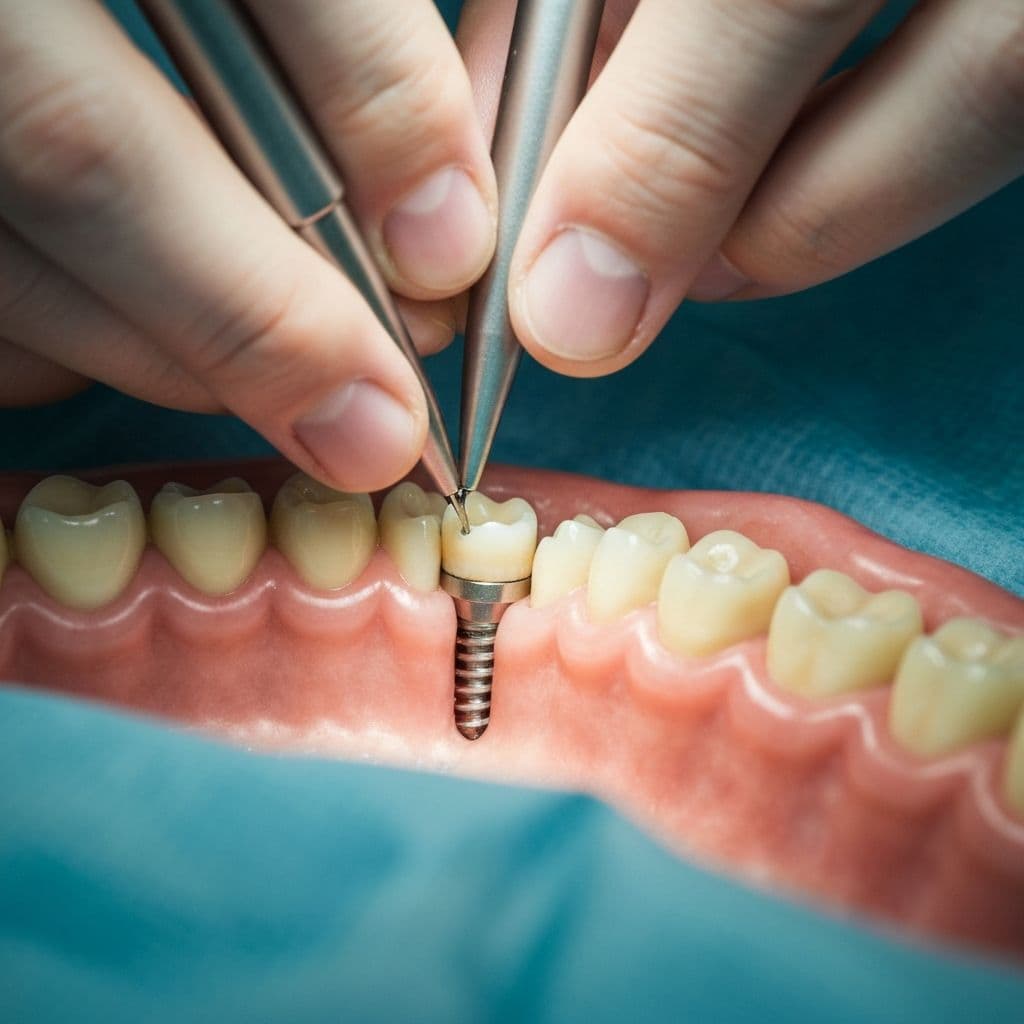
This is an illustrative, fictional case study—not a real patient record. The images are general illustrations, not case-specific photographs or before-and-after results. Individual diagnosis, treatment, timing, risks, and outcomes vary.
Introduction
Fictional composite for understanding tooth preservation
This is an educational fictional composite, not a real patient record or a report of treatment performed. It includes no actual symptoms, radiographs, examination measurements, clinician, or outcome. The phrase severely damaged tooth describes a hypothetical concern, not a confirmed diagnosis. The purpose is to explain how a dental professional might determine whether root canal treatment is relevant and how the tooth's remaining structure affects the broader plan.
Root canal treatment addresses tissue inside a tooth when clinically indicated; it does not rebuild every damaged outer surface. A tooth may need a filling, onlay, crown, or another restoration after endodontic care, depending on the remaining structure and forces. In some cases, the tooth cannot be predictably restored and extraction may be discussed. Only a dentist, and sometimes an endodontist, can evaluate the specific tooth and explain options.
- No real patient, treatment episode, or clinical outcome is described.
- Images are illustrative local assets, not case-specific clinical photographs.
- A root canal does not guarantee that a tooth can be saved or will remain problem-free.
The central question: can the tooth be predictably restored?
Pain or visible damage can prompt concern, but symptoms alone do not tell whether the pulp is affected or whether a tooth is restorable. The clinician needs to evaluate the extent and location of damage, supporting tissues, infection signs, cracks, and the likely restoration. The patient's priorities and health history also matter. The decision is not simply root canal versus extraction; it is whether a realistic, maintainable plan can address both the inside and the structure of the tooth.
Patient overview
A hypothetical presentation
Imagine, solely for educational purposes, a person asking about a tooth that appears substantially damaged or has become uncomfortable. This fictional placeholder has no age, medical history, tooth number, symptom duration, or confirmed diagnosis. A real clinician would ask what happened, whether pain is spontaneous or triggered, what makes it worse, and whether swelling or fever is present. The answers would guide examination but would not alone establish the diagnosis.
The person may be concerned about preserving the tooth, avoiding discomfort, treatment time, or cost. A clinician should acknowledge these concerns while explaining that preservation depends on clinical restorability and patient-specific risks. If urgent infection or trauma is suspected, timely assessment takes priority over choosing a long-term cosmetic or restorative plan from online information.
- Medical history and medication review would be gathered in a real visit.
- Symptoms are hypothetical prompts, not claims about a real person.
- No tooth-specific prognosis is assigned in this composite.
Chief complaint
Symptoms that might bring someone to care
A person may seek care for pain on biting, lingering sensitivity, spontaneous discomfort, a broken filling, a visible cavity, or swelling near a tooth. These are examples for discussion only. Some teeth with significant internal disease have few symptoms, while pain may arise from gum, sinus, jaw, or neighboring tooth problems. A description such as 'severe damage' cannot identify the cause, and home tests or online images are not substitutes for examination.
A clinician would ask about onset, pattern, intensity, triggers, prior dental work, injury, and any associated symptoms. Facial swelling, fever, spreading redness, difficulty swallowing or breathing, or rapidly worsening pain can indicate a need for urgent care. A patient should contact a dental professional promptly for these concerns; breathing or swallowing difficulty may require emergency services. This article is not an emergency triage service.
Clarifying the patient's goal
Some patients strongly prefer keeping a natural tooth when reasonable; others prioritize a shorter or more predictable plan. The dentist should discuss those values without implying that extraction is failure or that root canal therapy is always preferable. The patient may ask for a second opinion, especially when prognosis is uncertain or the proposed treatment is extensive. A decision is best made after the tooth's condition and realistic restorative options are explained.
Initial examination and clinical findings
A diagnostic examination, not a guess from symptoms
A real assessment may include visual inspection, examination of the restoration and surrounding tissues, bite and percussion tests, pulp sensibility tests, periodontal evaluation, and dental imaging selected for the clinical question. No one test is interpreted in isolation. Findings are compared with neighboring teeth and the patient's history. This case study supplies no positive or negative test results, no radiograph, and no measurement because those would falsely imply an actual clinical record.
The dentist needs to understand how much sound tooth structure remains and whether decay or a fracture extends below a level that can be restored. The location and depth of damage, cracks, gum and bone support, and ability to isolate the tooth for treatment may affect options. A root canal can address diseased pulp tissue but cannot make an unrestorable tooth restorable. Referral to an endodontist or restorative clinician may be considered when diagnosis or treatment complexity warrants.
Imaging can help evaluate roots, surrounding bone, and disease, but radiographs have limitations and must be interpreted by a qualified professional. Additional imaging is not automatically needed in every case. The clinician should explain why a particular image is recommended, how it could affect treatment, and whether the benefit justifies any exposure. The patient can ask to see and discuss findings in accessible language.
- Pulp status and source of symptoms, using history and appropriate tests.
- Extent of decay, cracks, previous restorations, and remaining tooth structure.
- Gum support, surrounding tissues, and whether a durable restoration is feasible.
- Need for specialist input or further imaging based on actual findings.
Restorability is a separate clinical question
Even if a tooth needs endodontic treatment, it must also be assessed for restoration. The clinician considers how the final restoration can protect the tooth, whether a margin can be maintained, and how the bite loads the area. A tooth with insufficient structure, a vertical root fracture, or poor support may have a different prognosis and options. The examples are general; they are not findings attributed to the fictional person.
Diagnosis and problem assessment
Possible diagnostic pathway, without assigning a diagnosis
No diagnosis is made in this fictional record. A real clinician would determine whether the pulp is healthy, inflamed, irreversibly damaged, or non-vital, and whether there is disease around the root. The clinician would separately assess cracks, periodontal support, and restorability. These questions shape whether root canal treatment, another intervention, monitoring, or extraction is discussed.
The patient should receive a clear explanation of the findings and their uncertainty. If tests disagree or symptoms do not match the first impression, further evaluation or referral may be appropriate. The dentist should avoid using a treatment recommendation as a substitute for explaining the diagnosis. A tooth should not undergo irreversible treatment solely because an image or symptom seems concerning without adequate clinical assessment.
Treatment options and selected plan
Options after diagnosis
A plan would depend on whether the tooth is restorable and what the pulp and surrounding tissues show. If the pulp is healthy and the damage is limited, a suitable restoration may be enough. If pulp disease is confirmed and the tooth can be restored, root canal treatment followed by appropriate definitive restoration may be considered. If the tooth cannot be predictably restored or has a poor prognosis, extraction and possible replacement choices may be discussed. In selected situations, monitoring or a specialist opinion can clarify uncertainty.
Root canal treatment is intended to clean and seal the internal canal system, but it has limitations and risks, including persistent or recurrent disease, procedural complications, and the possibility that the tooth may later fracture or need further treatment. Extraction also has consequences and may lead to discussion of a space, bridge, denture, or implant, each with its own requirements. The patient should understand what each path means now and over time, including maintenance and cost.
The restorative plan should be discussed before endodontic treatment where feasible. Depending on the tooth and remaining structure, a crown or another cuspal-coverage restoration may be recommended; it is not automatic for every tooth. A temporary restoration may be used between stages, and delay in completing definitive restoration can affect risk. The clinician should explain the intended sequence and how to protect the tooth between visits.
- Confirm the source of the problem and assess the tooth's remaining structure and support.
- Discuss whether the tooth is restorable and compare endodontic, restorative, monitoring, and extraction paths.
- If root canal treatment is chosen, plan the definitive restoration and interim protection.
- Complete treatment or referral with informed consent and individualized instructions.
- Review healing, function, and restoration integrity; arrange ongoing dental monitoring.
Shared decision-making and referral
An endodontist may be consulted for complex anatomy, retreatment, persistent symptoms, or diagnostic uncertainty. Referral does not mean that treatment must proceed; the specialist can help clarify options and prognosis. Patients should be told who is responsible for each stage and how information will be shared. If extraction is recommended, the clinician should explain why, discuss timing, and review whether replacement is necessary or desired rather than implying that one replacement option is mandatory.
- What evidence shows that the pulp is the source of the problem?
- Can the tooth be restored after root canal treatment, and how?
- What are the risks and alternatives, including extraction or a second opinion?
Illustrative sequence only
Treatment timeline
These stages describe a possible planning framework, not the history of an actual patient. Scheduling and healing vary and should be confirmed by the treating clinician.
- 01
Urgency and assessment
Promptly when symptoms or swelling warrantA clinician evaluates symptoms and signs, with urgent referral or emergency care when indicated. This is not a diagnosis from the article.
- 02
Diagnosis and restorability review
Based on the findings and any needed specialist inputAssess pulp, surrounding tissues, remaining structure, and options before committing to irreversible treatment.
- 03
Endodontic treatment, if chosen
One or more appointments depending on clinical circumstancesThe actual process and appointment count vary by tooth, diagnosis, and clinician; no specific duration is predicted.
- 04
Definitive restoration
According to the agreed restorative planProtect the tooth with an appropriate restoration when indicated; follow the dentist's guidance about interim care.
- 05
Monitoring
Follow-up individualized over timeReview symptoms, function, and healing; contact the dental team if problems persist or recur.
Treatment procedure
General root canal and restoration sequence
The following is general education only and is not a record of treatment. When root canal therapy is selected, a dental professional uses local anesthesia and appropriate isolation, accesses the internal space, removes diseased tissue, cleans and shapes the canals, and seals them according to clinical protocol. The exact approach varies by tooth anatomy and diagnosis. The clinician explains comfort measures, likely appointment structure, and what to do if symptoms change.
The tooth may receive a temporary filling between stages or a definitive restoration depending on the circumstances. Endodontic treatment alone does not restore lost outer tooth structure. A restorative dentist may provide a filling, onlay, crown, or another design based on remaining structure, location, and bite. The patient should understand the importance and timing of the final restoration and avoid placing excessive stress on a tooth that has not yet been protected as advised.
Follow-up is guided by symptoms, examination, and imaging when appropriate. If pain, swelling, or drainage persists or returns, the patient should contact the treating clinician. Further treatment, retreatment, surgery, or extraction may sometimes be considered, but none can be predicted for this fictional scenario. No claim is made that treatment was completed or that any tooth was saved.
- Explain diagnosis, alternatives, risks, anesthesia, and the planned restorative sequence.
- Treat the canal system using appropriate isolation and clinical technique if consented.
- Place an interim or definitive restoration according to the case and clinician's plan.
- Complete the protective restoration when indicated and clinically appropriate.
- Attend review and report persistent or new symptoms promptly.
Comfort and communication during care
Patients should tell the clinician if they feel pain or need a break. Local anesthesia and communication help manage comfort, but the experience varies. The clinician should invite questions before the procedure and provide a way to contact the office afterward. If the diagnosis or plan changes during care, the reason and alternatives should be explained and consent revisited when appropriate.
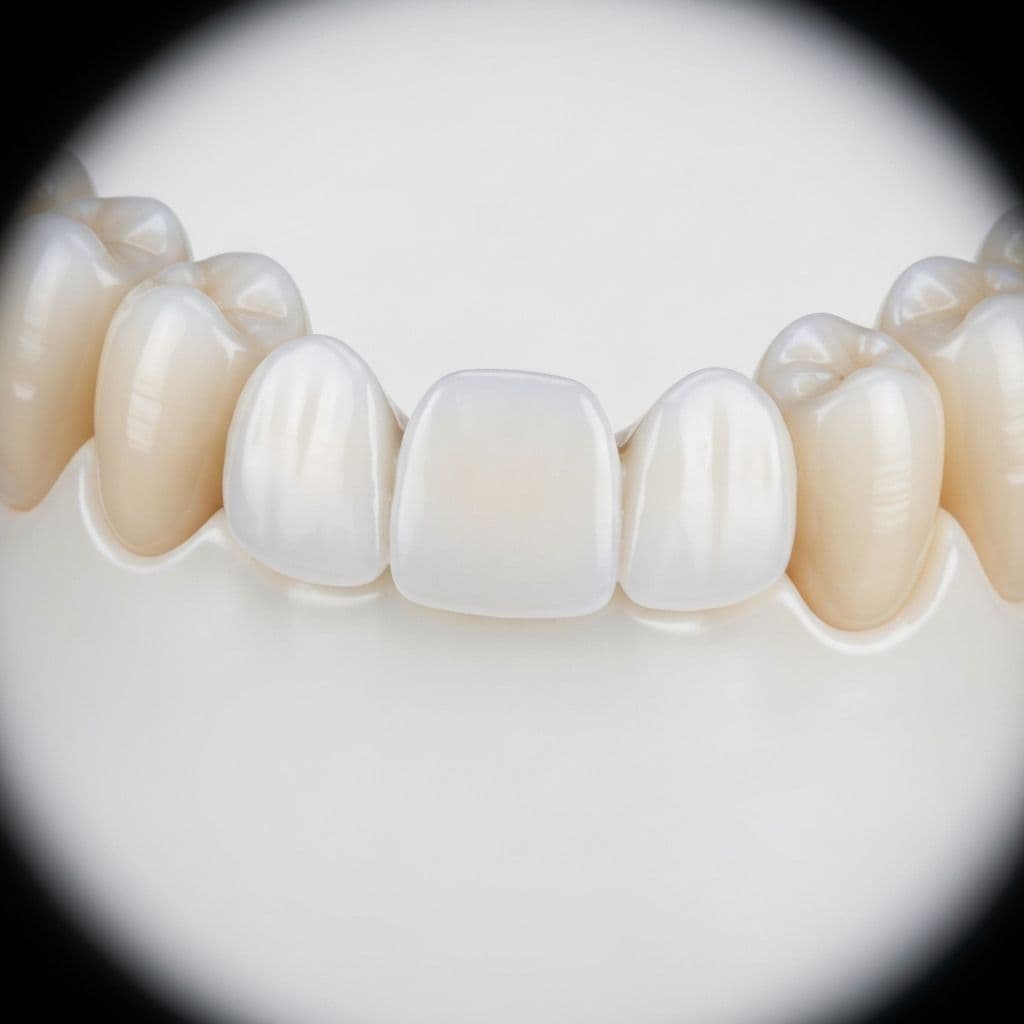
Illustrative treatment gallery
These general dental visuals are not photographs of the fictional scenario and are not before-and-after images. They do not represent a documented patient or clinical result.


Recovery and aftercare
Aftercare and warning signs
Some tenderness can occur after endodontic or restorative care, but the expected experience depends on the procedure and person. Follow the treating clinician's medication and eating instructions. Do not chew hard foods on a tooth that the dentist has advised protecting, and keep the area clean as directed. A generic time estimate cannot determine whether an individual's symptoms are normal.
Contact the dental office if discomfort worsens, swelling develops, a temporary filling comes loose, or the bite feels uneven. Fever, spreading swelling, difficulty swallowing or breathing, or severe uncontrolled pain needs urgent attention. Do not place aspirin or other substances directly on the tooth or gum, and do not start antibiotics without a clinician's direction. Follow-up is important even when symptoms improve.
Results and outcomes
Preservation is a goal, not a guarantee
Root canal treatment may allow a restorable tooth to remain in function, but no procedure guarantees that outcome. Healing, remaining structure, cracks, restoration quality, and future loading can all matter. This composite has no treated tooth, radiographic follow-up, or result to report. A clinician should explain the individual's prognosis using actual findings and acknowledge uncertainty.
A useful outcome review considers comfort, chewing, restoration integrity, and signs of disease, not simply whether pain has stopped. If a tooth cannot be saved or later develops a complication, the patient should receive a renewed explanation of options. Choosing an alternate path does not mean the person failed; care is tailored to the best available information and the patient's priorities.
Clinical discussion
Endodontics and restorability must be planned together
A common misunderstanding is that root canal treatment alone 'fixes' a severely damaged tooth. It treats the canal system but does not replace missing enamel or dentin. The long-term plan must consider how to restore the tooth and manage forces. If too little sound structure remains, or if a fracture makes the tooth unrestorable, endodontic treatment may not be a sensible investment. That determination requires examination and professional judgment.
The decision also balances tooth preservation against treatment burden and uncertainty. A clinician should not overpromise success, but should explain what treatment seeks to accomplish and how complications would be managed. Patients may ask about the evidence relevant to their tooth, the clinician's experience, and whether referral is appropriate. A second opinion can be valuable when the options are consequential or the prognosis is unclear.
Avoiding delayed or inappropriate care
Pain relief alone does not confirm that infection has resolved. Likewise, not every toothache needs a root canal, and antibiotics are not a substitute for definitive dental assessment. Prompt evaluation can clarify the cause and reduce the risk of postponing needed care. The correct response depends on examination, not on a general case study or symptom checklist.
Potential benefits
Potential aims of root canal treatment
When pulp disease is confirmed and the tooth is restorable, endodontic treatment may be considered to address internal infection or inflammation while retaining the natural tooth. Preserving a tooth can avoid an extraction and subsequent replacement decision, but it does not necessarily mean less treatment or lower long-term cost. The clinician should present likely benefits in relation to that person's actual diagnosis.
- May address disease in the tooth's internal canal system.
- Can be part of a plan to retain a tooth that is judged restorable.
- Requires a suitable restoration and continuing dental care.
- A specific outcome cannot be promised.
Challenges and limitations
Risks and limits
Treatment may involve discomfort, persistent disease, technical complications, or the need for additional procedures. A root-treated tooth can remain vulnerable to fracture depending on its structure and restoration. Some teeth are not restorable; in others, prognosis is uncertain. Extraction and replacement also carry costs and risks. A personalized discussion should address the possibility that the tooth may ultimately need removal even after treatment.
- Canals may be complex and treatment may require specialist care.
- Endodontic therapy does not rebuild lost tooth structure.
- A tooth may need a protective restoration and long-term monitoring.
- Persistent or recurring symptoms require professional reassessment.
Patient education
Preparing for an endodontic discussion
Bring a list of medicines, allergies, and relevant medical conditions, and describe symptoms as clearly as possible. Ask the dentist to show which findings support the diagnosis and to explain the restoration plan before starting. If you have concerns about anesthesia, appointment length, or cost, raise them early so the team can plan. Ask for urgent contact instructions and know what changes should prompt a call.
- What is the diagnosis, and what tests support it?
- Is the tooth restorable, and what restoration will be needed afterward?
- What happens if I choose extraction, monitoring, or a specialist opinion?
- How should I protect the tooth between treatment stages?
- Which symptoms are expected and which require urgent contact?
Frequently asked questions
Does every severely damaged tooth need a root canal?
No. Damage alone does not establish pulp disease. Some teeth need a restoration without endodontic treatment; others may need root canal treatment, specialist evaluation, or extraction. A dental examination and appropriate tests determine the options.
Can a root canal save any tooth?
No. Root canal treatment addresses the inside of a tooth but cannot correct every fracture or replace all missing structure. The clinician must assess whether the tooth can be predictably restored and maintained.
Will I need a crown after root canal treatment?
That depends on the tooth, remaining structure, and bite. Some teeth need cuspal coverage or another protective restoration; it is not a universal rule. Ask your dentist to explain the specific restorative plan.
Are antibiotics enough to treat a tooth infection?
Antibiotics do not replace dental diagnosis and definitive treatment, and they are not appropriate for every dental problem. A clinician decides whether medication is indicated. Seek prompt care for swelling or systemic symptoms.
Is this a real patient's root canal story?
No. This is a fictional educational composite with no patient record or outcome. The images are project-local illustrations and are not clinical photographs of a treated tooth.
Conclusion
Make the decision from diagnosis and restorability
This illustrative composite demonstrates why a damaged tooth needs careful diagnosis and a restorative plan, not an automatic root canal. Endodontic treatment may be one option when pulp disease is present and the tooth can be restored, but it has limitations and is not a guarantee of preservation. Alternatives should be explained in the context of the person's own findings and goals.
If you have tooth pain or visible damage, arrange professional assessment, especially if symptoms are worsening or swelling occurs. A dentist can identify urgency, explain findings, and help compare treatment and referral options. Do not use this fictional example to self-diagnose, delay emergency care, or assume a particular treatment will work for you.
This educational scenario is not medical advice and should not be used to self-diagnose or choose treatment. Consult a qualified dental professional for an examination and individualized guidance.